About Hammonasset Beach State Park
The Park at a Glance
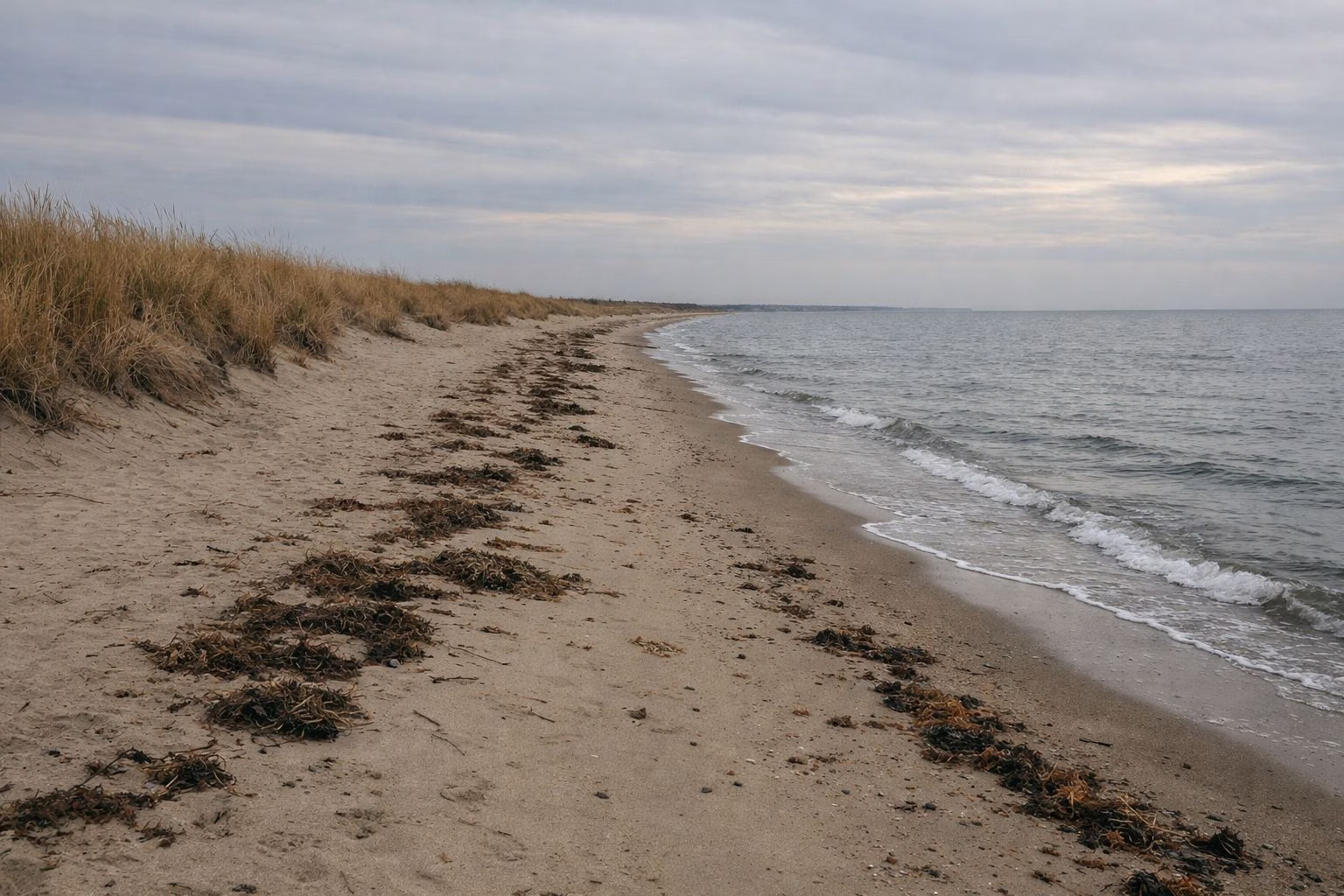
Hammonasset Beach State Park is Connecticut's largest shoreline park, with about two miles of sandy beach on Long Island Sound in Madison. It opened on July 18, 1920 as the state's 19th state park and is managed by the Connecticut Department of Energy and Environmental Protection (DEEP). Behind the beach are a salt marsh nature preserve, the state's biggest campground and the Meigs Point Nature Center.
Where the Name Comes From
DEEP says "Hammonasset" means "where we dig holes in the ground," an Eastern Woodland Indian term for the farming land along the Hammonasset River. Friends of Hammonasset's history names the Hammonassett as one of five tribes on the Connecticut shoreline. They grew corn, beans and squash, and also fished, foraged and hunted.
The first colonists arrived in 1639. In 1641 Uncas, a Mohegan sachem, married into the tribe, and the land passed to the Mohegans as part of the dowry. Uncas sold it to George Fenwick of the Saybrook Colony, who later traded it to Henry Whitfield of Guilford as farmland. The Hammonassett moved to the Niantic River area and became part of the Mohegan Tribe.
Farmland, Salt Hay and a Rifle Range
For more than 250 years the land was farmed. Colonists gathered seaweed and cut salt-marsh hay for their horses and cattle, and at one point fish oil sheds on the beach boiled fish down for oil. In 1828 a farm and farmhouse were built where the Meigs Point Nature Center stands today, with an orchard on Willard Island.
In 1898 the Winchester Repeating Arms Company bought Hammonasset to test a new rifle. Friends of Hammonasset says the company mounted its Lee Straight Pull rifle on a horse-drawn stone boat and fired it into targets on the beach.
Becoming a State Park
In 1919 the Connecticut Park and Forest Commission began buying the land from Clarkson Meigs and other owners. By the end of that year it had bought 565 acres, now the western end of the park, for $130,960. The park opened to the public on July 18, 1920, and more than 75,000 people came in the first season.
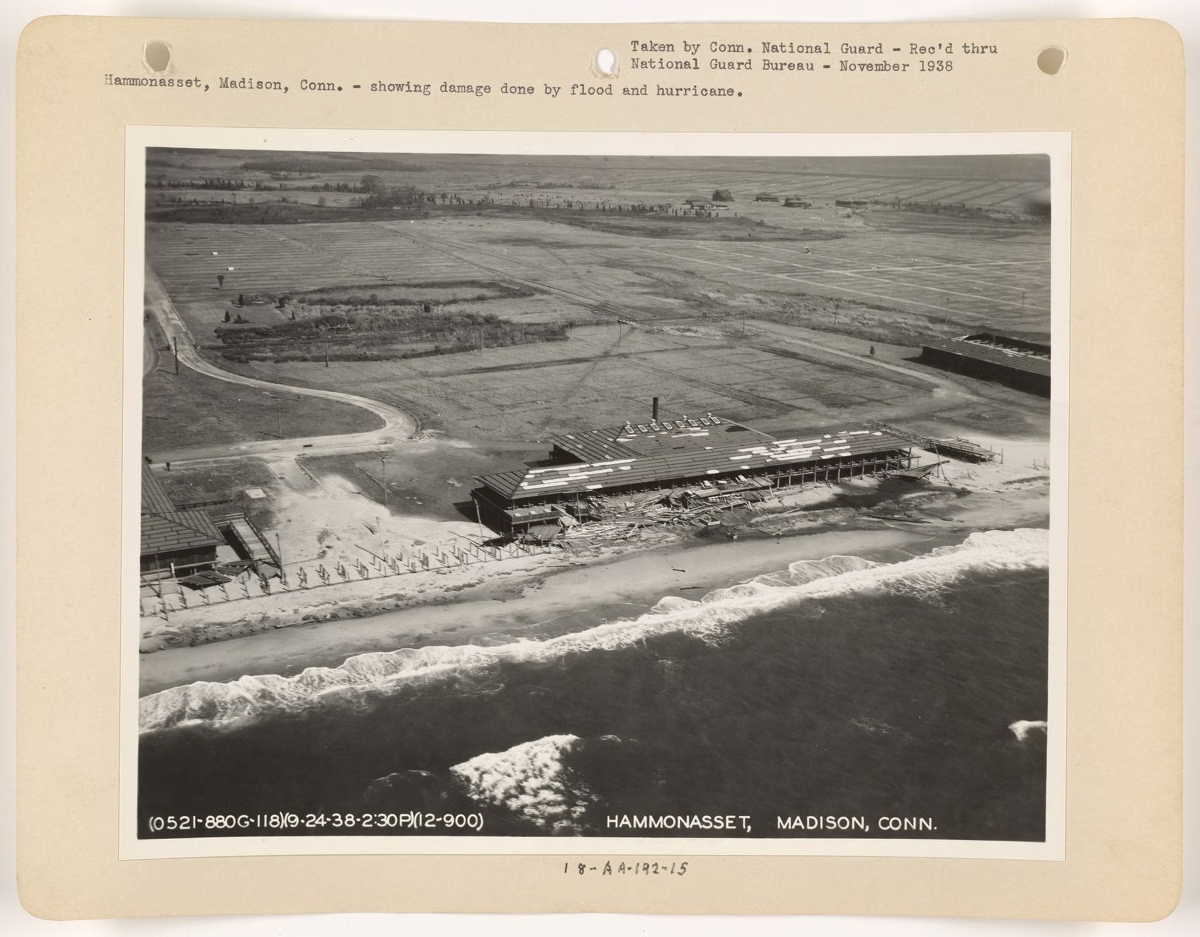
The state put up a Grand Pavilion and a boardwalk, plus a clam shed with a kitchen and an indoor dining area. They were meant to last five to ten years. The Grand Pavilion stood until 1967, surviving several big storms, including the Hurricane of 1938. In 1923 the park nearly doubled with another 339 acres, and it drew visitors from well beyond Connecticut.
Camping has been part of Hammonasset since it opened in 1920, according to Friends of Hammonasset. Today the campground holds 40% of all the campsites in Connecticut's state parks, DEEP says.
World War II
During the war the park closed to the public. The federal government leased it as an army reservation and an aircraft firing range. P-47 fighter planes practiced on targets set up along Meigs Point Road, firing toward the Sound rather than the shore. Friends of Hammonasset says one plane crashed during practice and is still in the Sound.
After the War
Hammonasset reopened after the war and soon broke attendance records. The stone breakwater at Meigs Point was built in 1955, with stone trucked in from quarries in northern New England. Today it's one of the two jetties where DEEP allows daytime fishing.
The first nature center opened in 1952, when the camp manager's teenage daughter turned a room of the old farmhouse into an amateur nature center. Meigs Point Nature Center opened as a summer facility in 1972 and has been open year-round since 2005.
The Park Today
DEEP describes the park as part brackish tidal marsh, part deciduous forest and part estuary. Those habitats draw so many birds, including rare and endangered species, that the National Audubon Society named the area a Globally Significant Bird Area. The marsh behind the beach is protected as the Hammonasset Natural Area Preserve on DEEP's map (see our park map page).
The park is run by DEEP's State Parks division. Friends of Hammonasset, a volunteer nonprofit, supports education programs and the park's natural resources. DEEP's park page is the official source for current hours, fees and notices. To plan a trip, start with Plan Your Visit.